socerstreams
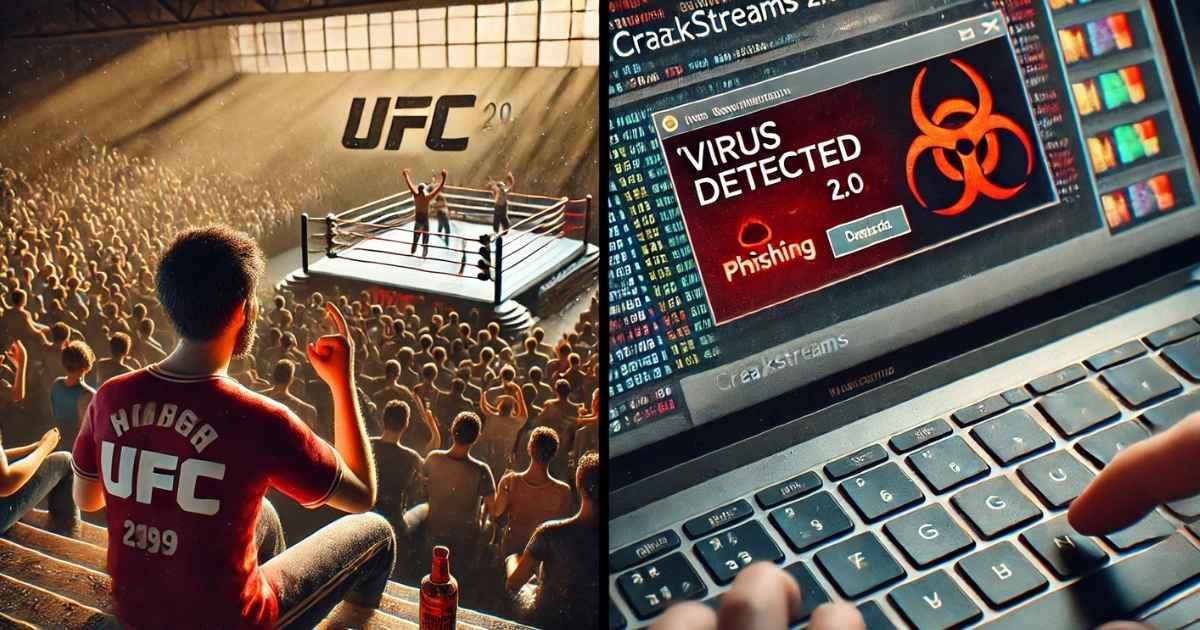
CrackStreams was once the most notorious name in unlicensed sports streaming — the site fight fans opened on Saturday nights for UFC and boxing, and that ball fans used for NBA, NFL, and MLB games they could not watch legally. After sustained enforcement action, the original operation was dismantled, and what exists today under names like “CrackStreams 2.0” is a swarm of imitator domains trading on the brand. This crackstreams 2 0 guide explains the shutdown status, why the current clones are especially risky, and the legal services that now cover the fights and games people used CrackStreams to watch.
What CrackStreams Was
CrackStreams operated as a large unlicensed sports streaming network with an emphasis on combat sports. While it indexed links for the NBA, NFL, MLB, NHL, and soccer, its reputation was built on UFC pay-per-view events and major boxing cards — the most expensive content in sports television, offered free through embedded third-party streams.
The model will be familiar to anyone who used pirate sports indexes: a schedule of upcoming events, multiple stream links per event, and a chat box where users reported which links were working. Revenue came from aggressive advertising — pop-ups, redirects, and overlay ads — and the operation ran at a scale that put it on the radar of every major sports league and broadcaster.
CrackStreams became a particular priority for enforcement because of the economics of what it distributed. A single UFC pay-per-view or championship boxing card represents tens of millions of dollars in expected revenue, so rights holders pursued the network’s operators, domains, and infrastructure with unusual persistence.
Shutdown Status: What “CrackStreams 2.0” Really Is
The original CrackStreams network was taken down following one of the most sustained enforcement campaigns against any streaming piracy operation, with its domains seized and its infrastructure dismantled. No specific shutdown date can be responsibly cited — the takedown unfolded across multiple actions rather than a single day — but the original operation is gone.
What followed is the important part. The CrackStreams name retained enormous search value, so unrelated operators began registering “CrackStreams 2.0” and similar domains to capture the displaced audience. These are not continuations of the original site. They are imitators with no connection to the original operators, no consistent quality, and — critically — no reason to maintain even the minimal safety standards the original observed.
Some of these clones function as straightforward pirate indexes. Others are closer to scams: pages that demand registration, push “required” apps, or harvest payment details under the guise of unlocking HD streams. Because the name now belongs to no one, there is no authoritative version to trust and no way for a visitor to distinguish a working clone from a malicious one. Searching for CrackStreams today leads into an environment where the brand is bait and the visitor is the product.
The Risks of CrackStreams Clones
The hazards below apply to “CrackStreams 2.0” domains and to the current generation of pirate sports clones generally. They are worse, on average, than the risks of the original sites, because the clone ecosystem selects for the most aggressive monetization.
Malware engineered around fight night
Clones monetize through the lowest-quality ad networks available, and their pages are dense with fake play buttons, “HD unlock” prompts, and redirects insisting on player or codec installs. Major fight nights concentrate millions of desperate visitors into a few hours, which is exactly when malicious advertisers bid hardest for placement. Drive-by downloads, unwanted extensions, and trojans disguised as streaming software are routine on these domains.
Payment and credential harvesting
A distinctive danger of the CrackStreams clone ecosystem is the fake paywall: pages claiming the “free” stream requires a credit card for “verification,” an account signup, or a paid “premium” unlock. These are fraud operations. Entering payment details hands them to criminals, and reused passwords from fake registrations compromise accounts elsewhere. No legitimate free stream of a UFC card or NBA game asks for your credit card.
Legal exposure for viewers
Sports leagues actively monitor high-value events for infringing streams, and internet providers in many countries forward copyright infringement notices to subscribers. Enforcement against individual viewers is less common than action against operators, but major pay-per-view events draw the most enforcement attention of any content category. Streaming unlicensed broadcasts is infringement in most jurisdictions — treat this as general information, not legal advice.
Streams that vanish mid-event
Rights holders run live enforcement during major cards and games, and clone streams are taken down in real time. Feeds that die between rounds, during overtime, or in the championship minutes are the norm rather than the exception. The unreliability is structural: disposable infrastructure cannot deliver the stability of a licensed broadcast.
Legal Alternatives: Fights, Then Everything Else
CrackStreams’ audience split roughly into fight fans and ball-sport fans, so the alternatives below are ordered the same way. Prices are US figures, stated as around/starting-at and current as of Oct 2026.
DAZN
DAZN is the specialist service for combat sports, built around boxing and MMA with 185+ fight nights a year from major promoters, plus shoulder programming and documentaries. In the US, the Standard plan starts at around $30.99/month on the flexible monthly option, or around $224.99/year paid upfront (as of Oct 2026). For viewers whose CrackStreams habit was mostly boxing, this is the service purpose-built for them.
Paramount+
Paramount+ is now the home of UFC in the US, with numbered events and Fight Nights included in the subscription following the end of the ESPN pay-per-view era. The ad-supported Essential plan costs around $8.99/month and ad-free Premium around $13.99/month (as of Oct 2026) — a fraction of what a single pay-per-view used to cost. It also carries NFL on CBS and UEFA Champions League soccer.
ESPN Unlimited
ESPN Unlimited bundles the full ESPN channel suite — ESPN, ESPN2, ESPNU, ESPNews, SEC Network, ACC Network — with WWE premium live events like WrestleMania and the Royal Rumble. It costs around $31.99/month or $319.99/year (as of Oct 2026). Combat-sports fans who also follow college football or the WWE will find this the most complete single subscription.
ESPN Select (formerly ESPN+)
ESPN Select is the lower-priced tier for fans who want breadth without the full channel bundle: NHL, MLB, MLS, LaLiga, college sports, and Grand Slam tennis, plus the 30 for 30 library. It runs around $13.99/month or $139.99/year (as of Oct 2026). Note that UFC moved to Paramount+ in 2026, so fight fans should not subscribe here expecting UFC coverage.
Fubo
Fubo’s sports-first live TV lineup covers ESPN, FS1, NFL Network, regional sports networks, and major broadcast channels — strong for fans who follow local teams across leagues. The Sports + News plan starts at around $64.99/month and the Pro plan at around $88.99/month, with a regional sports fee of up to $16.99 in some areas (as of Oct 2026). Boxing fans should note that premium fight cards generally remain pay-per-view elsewhere.
YouTube TV
YouTube TV carries 100+ channels including every major sports network, covers nearly all nationally televised games, and includes unlimited cloud DVR. The base plan is around $82.99/month, with a sports genre plan from around $64.99/month (as of Oct 2026). It is also the platform for NFL Sunday Ticket, the only legal route to every out-of-market Sunday NFL game.
Sling TV
Sling TV remains the cheapest way into live sports channels: the Orange plan (ESPN networks) and Blue plan (Fox, NBC, USA) each start at around $46/month, with smaller packs from around $20/month and a combined package at around $61/month (as of Oct 2026). The lineup is leaner than the full-size competitors, but the price is correspondingly lower.
Peacock
Peacock’s sports rights include NFL Sunday Night Football, Premier League soccer, and NBA and WNBA games. Premium with ads costs around $12.99/month and ad-free Premium Plus around $19.99/month (as of Oct 2026). Premier League followers in particular get strong value here.
NBA League Pass
NBA League Pass streams every out-of-market NBA game live and on demand with home and away commentary feeds. Pricing starts at around $16.99/month or $109.99 per season, with Premium (three streams, in-arena feeds) at around $24.99/month or $159.99/season (as of Oct 2026). Local and nationally televised games are blacked out.
MLB.TV
MLB.TV, now distributed through ESPN, offers every out-of-market regular-season game plus MLB Network and minor league coverage. It costs around $149.99 per season or $29.99/month, discounted to around $134.99/season for ESPN Unlimited subscribers (as of Oct 2026). Single-team plans are available from around $99.99 to $129.99 per season.
NFL Sunday Ticket on YouTube
NFL Sunday Ticket is the exclusive home of out-of-market Sunday afternoon NFL games, sold via YouTube TV and YouTube Primetime Channels. New customers paid around $240 for the 2026 season; returning customers paid around $378 with YouTube TV or $480 standalone (as of Oct 2026). Nationally televised games — Thursday, Sunday, and Monday nights — air on their regular networks and are not included.
Frequently Asked Questions
What is CrackStreams 2.0?
“CrackStreams 2.0” is not a single site and not a continuation of the original CrackStreams. It is a label applied to numerous imitator domains registered after the original network was taken down, run by unrelated operators trading on the brand’s search traffic. None of them are official, and none can be trusted.
Why was CrackStreams shut down?
CrackStreams distributed unlicensed streams of high-value sports broadcasts — particularly UFC pay-per-views and championship boxing — at a scale that made it a priority target for leagues, broadcasters, and rights holders. Sustained enforcement action resulted in domain seizures and the dismantling of its infrastructure.
Is CrackStreams 2.0 safe to use?
No. The clone domains carry the standard pirate-streaming risks — malware-laden ads, phishing, and fake paywalls — and the lack of any accountable operator makes them worse on average than the original. Several clones exist primarily to harvest payment details and credentials rather than to stream anything.
What is the cheapest legal way to watch UFC now?
Paramount+, at around $8.99/month for the ad-supported Essential plan (as of Oct 2026). UFC moved there in 2026 with events included in the subscription, ending the era when each numbered card cost a separate pay-per-view fee. That single change removed the main economic reason fight fans used pirate streams.
Can I get in trouble for watching a pirate stream link someone sent me?
Clicking a link does not change the legal status of the stream: watching unlicensed broadcasts is infringement in most jurisdictions regardless of how you found it. Practically, enforcement focuses on operators, but ISPs in many countries do forward infringement notices to subscribers. Beyond the legal question, links shared socially are a common vector for the phishing and malware described above.
Are free sports streaming apps in app stores legal?
Some are — official league and broadcaster apps with free tiers do exist. But an app with a familiar pirate brand name, no verifiable publisher, and demands for sideloading outside the app store is not legitimate. Check the publisher name, read recent reviews, and be suspicious of any “free sports” app that asks for payment details upfront.
Why do the clone sites always ask me to disable my ad blocker?
Because aggressive advertising is their entire revenue model. The request itself is a warning sign: legitimate services do not need you to lower your defenses to function. If a site cannot operate with an ad blocker on, that tells you everything about how it makes money and what it exposes you to.
The original CrackStreams is gone, and the “2.0” domains wearing its name are among the least trustworthy corners of an already risky ecosystem. The economics that made piracy tempting — especially the pay-per-view model — have also shifted: with UFC on Paramount+ and deep league-pass options across every major sport, the fights and games are now available legally for less than the cost of a single old pay-per-view.